Liner Notes & Lore · May 31, 2026
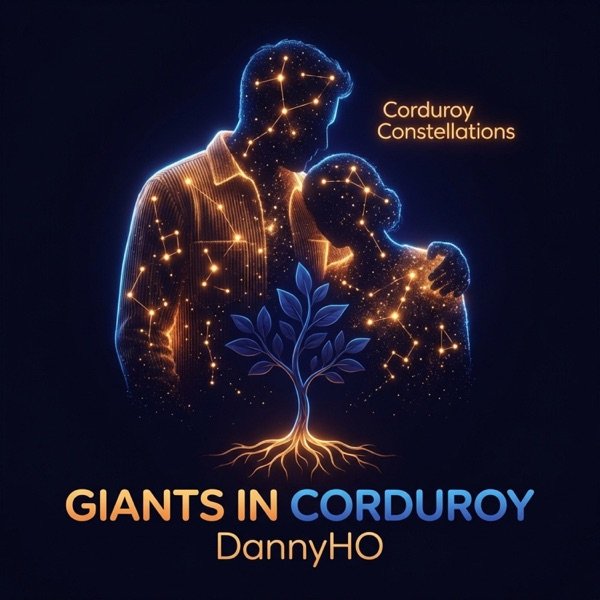
Giants in Corduroy, The Architecture of Being Kept

1. THE PROVOCATION
What does it mean to discover, long after the fact, that the person who challenged you most was also the person who loved you best? Giants in Corduroy begins inside that question. Its narrator is not handed a clean redemption story. He is a frightened, distracted young person living beneath the pressure of invisibility, mistaking correction for contempt and discipline for rejection. The mentor at the record’s center is weary, imperfect, coffee-stained, and persistent. That imperfection matters. The album refuses the fantasy of the flawless guide in favor of something more difficult and more generous: care expressed through repetition, expectation, and showing up again tomorrow.
2. SYMBOLS & SUBTEXT
“Red Ink Map” transforms the marks of failure into evidence of attention. The teacher’s corrections do not merely identify what is wrong. They become a map, suggesting that an error can contain direction when someone takes the time to read it closely. For listeners carrying imposter syndrome into adult success, this is a quiet reversal. Critique is not always proof that you do not belong. Sometimes it is proof that someone believes you can arrive.
“The Take” deepens that idea through repetition. Its practice montage is not really about mastering a performance. It is about rehearsing the courage to apologize, to speak, to become audible. Then “Jacket in the Rain” finds the record at its emotional edge. The mentor offers no grand speech, only “See you tomorrow,” a sentence that understands survival can depend on being expected somewhere. In “The Torch Passed,” the point of view changes. The former student addresses someone new, revealing that inheritance is not nostalgia. It is responsibility.
3. SONIC ARCHITECTURE
DannyHO builds this world from objects that remember human touch. Chalk drag, pages turning, locker slams, pen clicks, rain on windowpanes, a mug set down, and a distant school bell become percussion and atmosphere. These details give the album its lived-in grain, as though each song has been recovered from a desk drawer rather than manufactured in a vacuum. Close-mic’d acoustic guitar carries fret noise and breath. Felt piano offers softness without sentimentality. The recurring three-note clarity motif appears first as a fragile possibility, then returns at crucial thresholds, finally settling into the closing resolution.
The production mirrors memory’s changing scale. “Static at the Door” begins constricted, its anxious mono haze and faint tinnitus giving way to a widened chorus. “Giants in Corduroy” grows from intimate folk-pop confession into communal orchestral release, while “Draft Saved” lets vocoded backing voices embody thoughts that remained unsent. Even the brighter surface of “Blue Light Static” contains strain beneath its major-key mask. Nothing here is polished into false ease.
4. THE PERSPECTIVE SHIFT
This album asks adults to reconsider the private genealogy of their competence. The steadiness they now call self-made may carry fingerprints from a teacher, coach, sibling, or elder who planted hope without demanding credit. Its deepest challenge is equally tender: to see those mentors as people, flawed and exhausted, wearing terrible corduroy and still choosing to care. Giants in Corduroy turns gratitude into an active ethic. We do not honor the people who kept us alive by idealizing them. We honor them by becoming a room someone else can safely enter tomorrow.