Liner Notes & Lore · June 26, 2026
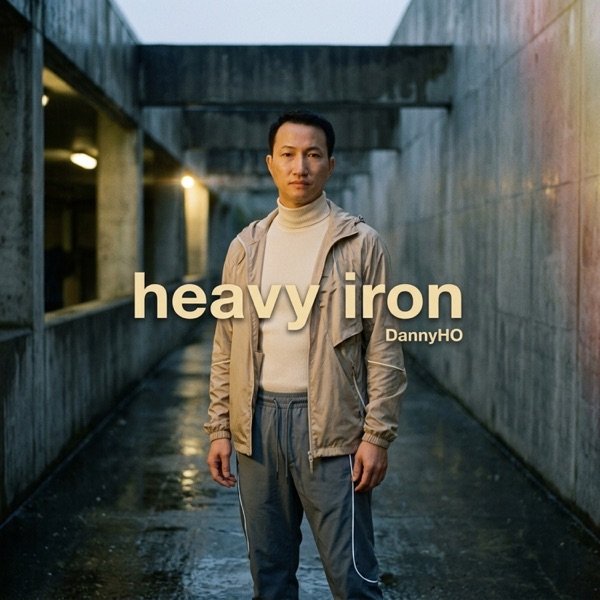
heavy iron, Liner Notes from the Crucible

1. THE PROVOCATION
At the heart of heavy iron lies a brutal heresy: tenderness is not the opposite of power. It is the wound that teaches power where to strike. This record begins in suppression, in the old belief that survival belongs to the numb, the blank-faced, the unreadable. Fear must be buried. Rain must be swallowed. The self must be smoothed into stone. But the album refuses that doctrine. It asks a harder question: what happens when the very feeling you are taught to kill becomes the force that makes you lethal? DannyHO frames innocence not as purity, but as a luxury that hostile worlds punish. Love, here, is not sanctuary. It is exposure, risk, and finally metamorphosis.
2. SYMBOLS & SUBTEXT
In “scars in the clay,” the wall marks are the album’s first real revelation. What seemed like evidence of invasion turns out to be proof of prior desperation, fingers dragged into stone by those who came before. The training ground is not protecting anyone from an outer threat. It is manufacturing ruin from within. That twist changes the moral gravity of the whole record. The enemy is already inside the institution.
“weight of the iron” deepens the danger. The locked gaze at first reads like predation, a test, perhaps even humiliation before authority. Instead, that encounter is covert protection. Desire enters the story disguised as threat. The title itself suggests more than weaponry or discipline. It is the burden of awareness, the sudden heaviness of realizing another person can alter your fate.
Then “melting the chain” delivers the album’s harshest truth. The chain is not imposed by captors. It is the narrator’s last refusal, the final boundary between conscience and necessary violence. To melt it is not liberation in any innocent sense. It is consent to become fearsome. By the time “vows in the dust” arrives, devotion has hardened into a pact of mutual survival, beautiful and morally scorched.
3. SONIC ARCHITECTURE
The album’s world is built from friction between human breath and crushing force. Sparse acoustic guitar harmonics, fretboard squeaks, solitary whistle lines, and raw close-mic baritone phrases keep the body present, vulnerable, unmistakably mortal. Against them rise distant toms, taiko weight, orchestral stabs, scraping metal, wood-knock snares, and bass pressure that feels less electronic than geological. Even the quietest pieces carry threat in their ribs.
What makes this Electronic record so vivid is its refusal to feel synthetic in spirit. The sound is tactile. Damp stone, worn grip, smoke in the lungs. Vocals evolve with the narrative: guarded whispers in “scars in the clay,” soft fractures in “rust on the blade,” reverent hush in “holding the ember,” then full-throated command in “becoming the wildfire.” The transformation is not just written. It is physically sung.
4. THE PERSPECTIVE SHIFT
This album challenges a comforting fantasy many listeners inherit: that love makes us gentler, safer, easier to recognize as good. heavy iron argues the opposite. In violent systems, love may demand ferocity. It may strip away the vanity of innocence and reveal that morality, when severed from survival, can become its own kind of surrender.
For listeners drawn to dark romantasy, war-scarred devotion, and ascension stories, the sting of this work is its honesty. The final triumph is majestic, but not clean. DannyHO does not offer healing as a return to who you were. He offers a harsher vision: sometimes growth means accepting that the self who survives will no longer ask permission to be feared.