Liner Notes & Lore · September 5, 2026
Atezaki no nai Orgel, The Warmth of What Was Never Sent

1. THE PROVOCATION
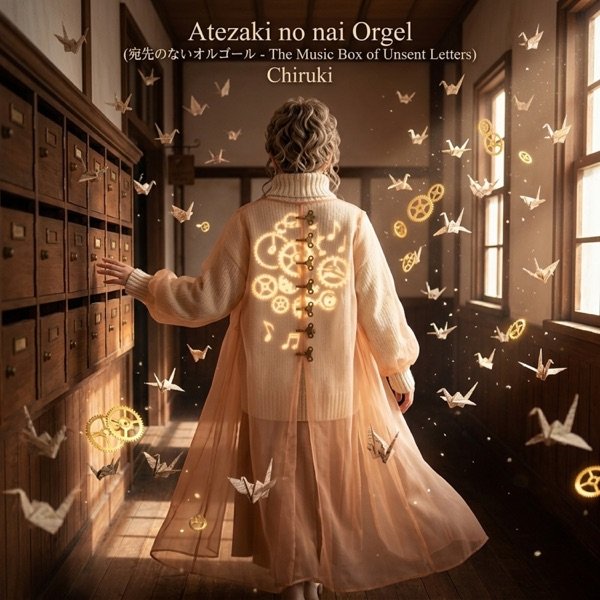
Some albums mourn what ended. This one studies what was never said in time. Atezaki no nai Orgel imagines regret not as a wound that must be reopened, but as a handmade object placed gently on a wooden table and turned in the light. In Chiruki’s world, silence is never empty. It gathers weight, texture, weather. It becomes a stamp kept for a letter never mailed, a gear missing from a song, steam rising from tea left too long. The record’s deepest premise is quietly radical: love does not need a dramatic collapse to leave a lasting ache. Sometimes it simply loosens its grip, and what remains is not ruin, but a room full of tender evidence.
2. SYMBOLS & SUBTEXT
Amaoto Post begins with a beautiful misdirection. The grief is not centered on the absent letter, but on the unused stamps. That shift matters. The stamp represents readiness, intention, the small courageous act that almost happened. Regret lives there, in the near-motion of the heart. Haguruma to Watashi sharpens that insight. Its missing gear is not fate, incompatibility, or mystery. She names her own silence as the piece she removed. The song refuses the comfort of vague heartbreak and chooses accountability without self-cruelty.
Hanbun no Umbrella is even more delicate. A wet shoulder becomes the record’s quiet thesis on youthful pride. She did not suffer nobly. She chose discomfort because closeness felt more precious than honesty. Then Origami no Shiro performs the album’s most generous alchemy. The very paper that could have preserved sorrow becomes building material for play. Memory is not erased. It is folded, reshaped, given corners and towers and air.
3. SONIC ARCHITECTURE
The production lives in miniature. Felt piano, upright bass, clarinet, toy piano, celesta, marimba, and glockenspiel create a tactile softness, while rounded synths and muted drums add a cushioned glow. Rain on windows, winding keys, ticking mechanisms, paper rustle, and room ambience are not decorative details. They are emotional evidence. Every sound feels close enough to touch.
Chiruki also understands scale. Hikarazu no Lamp moves from dim restraint into warm illumination, mirroring its realization that loss was not inevitable neglect of the heart can imitate destiny. Elsewhere, vocals shift with precise dramatic purpose: chest-voice hush in Amaoto Post, rhythmic play in Haguruma to Watashi, airy storytelling in Hanbun no Umbrella, a tired exhale in Glockenspiel no Akubi, and finally the unforced ease of Chiisana Yell.
4. THE PERSPECTIVE SHIFT
What this album offers is not closure as a grand event, but release as a domestic practice. It suggests that maturity may look less like winning an argument with the past and more like making tea, opening a window, rebuilding a small broken thing with patient hands. The unsent message, in the end, was never only for the one who left. It was for the self who stayed behind, still waiting to be spoken to gently. That is the lasting grace of Chiruki here. She turns hindsight into shelter.