Liner Notes & Lore · March 13, 2026
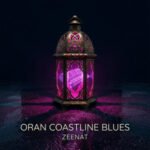
Oran Coastline Blues, Notes from a Night That Refuses to Leave
1. THE PROVOCATION
What happens when exile begins long before the border? That is the wound at the center of Oran Coastline Blues. This record is not about departure alone. It is about the psychic rehearsal of departure, the way a city can start to feel distant while you are still walking through it. Oran appears here as dusk, smoke, chrome, prayer, sweat, sea salt, neon, and refusal. The Drifter is seduced by elsewhere, yet every attempt to imagine escape pulls him deeper into the emotional grain of home. Zeenat understands this contradiction with unusual tenderness. Raï’s rebel pulse becomes the perfect vessel for a drama of split loyalties, where tradition is not a museum and modernity is not salvation. Both are intimate, compromised, alive.
2. SYMBOLS & SUBTEXT
“Static on the Corniche” announces the album’s thesis with deceptive elegance. The title suggests interference, but the deeper disturbance is perceptual. The sea has become indistinguishable from signal noise. Nature and technology blur into one anxious hum, as if the coastline itself were broadcasting confusion. In “The Paris Proxy,” the lie is heartbreakingly small. He pretends to have already arrived, but the world around his voice betrays him. The hidden cruelty is that the beloved may believe the fiction, while the listener hears the call to prayer in the distance and knows exactly where he still stands. The song turns migration into performance, intimacy into improvisation.
“Letters from Algiers” cuts even deeper. A title that promises romance reveals bureaucratic rejection. The kept visa refusal becomes a relic, almost a love letter from a future that denied him. Then “Ferry to the North” alters the entire moral temperature of the album. The missed crossing is not pure misfortune. He had the ticket. He chose to remain. Suddenly ghorba is no longer only something imposed from outside. It is also a choice, a fear, a fidelity, a self-willed ache.
3. SONIC ARCHITECTURE
The album’s great masterstroke is the Gasba, present in every track like a witness who changes masks. Sometimes it arrives as breath and wood grain, close enough to hear the human body inside the note. Sometimes it hardens into a metallic lead, almost synthetic, almost severed from origin. That transformation mirrors the record’s central tension between inheritance and invention. Gallal swing governs the pulse more than rigid dance symmetry, giving the grooves a bodily sway, especially in “Diesel & Jasmine,” “Rue de la Bastille,” and “The Pirate Station.” Field recordings, waves, French chatter, spoon clinks, rain, passing cars, keep the songs stitched into one nocturnal film.
Vocally, Zeenat moves with dramatic intelligence. Darija spoken word, whispered confession, Raï-rap urgency, autotuned ache, crooned fatigue, and finally the purified openness of “Dawn Over Santa Cruz.” Even the production arc tells a moral story. The album begins in sensory overload, descends into private fracture, then reaches a sunrise where the morning Adhan and the synth pad no longer compete. They harmonize.
4. THE PERSPECTIVE SHIFT
This work asks the listener to stop imagining home and diaspora as opposites. It proposes something more difficult and more true. The border can live inside the body. A visa can become a love object. A nightclub can resemble a shrine. A ferry can leave without taking anyone anywhere. For the Arab diaspora, this is recognition without simplification. For lovers of North African cinema, it offers urban poetry without romantic fog. For everyone else, it opens a precise emotional vocabulary for longing in an age of fractured belonging. Zeenat does not resolve the tension between here and there. He gives it rhythm, voice, and a coastline at first light.