Liner Notes & Lore · January 25, 2026
Afterglow: The Light That Remains

1. THE PROVOCATION
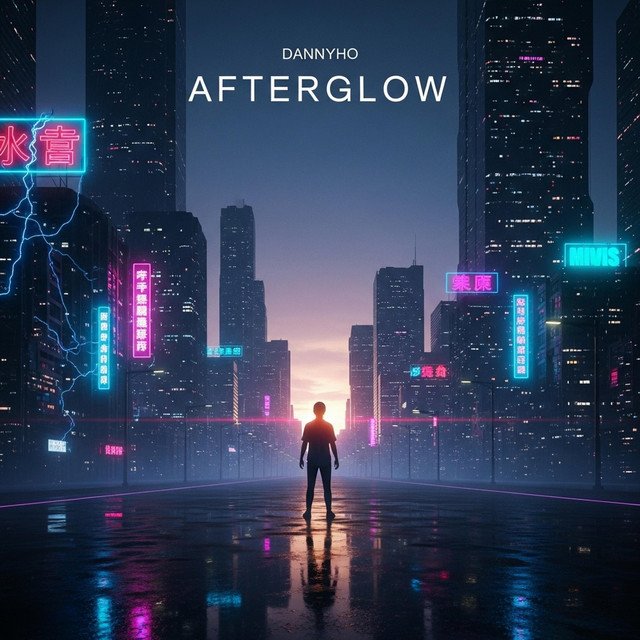
What survives when a love burns through its own fuel? Afterglow does not treat heartbreak as a clean ending or a private tragedy. It stages grief inside a metropolis of flickering signs, traffic haze, wet pavement, electrical hum, and rooms made suddenly unfamiliar. The city becomes a memory bank, endlessly replaying what the protagonist cannot release. Yet the record’s central argument is not that pain disappears. It is that pain can be transmuted. DannyHO frames emotional collapse as an act of alchemy, asking whether the self that emerges from loss might be more awake, more self-possessed, and more capable of carrying its own light.
2. SYMBOLS & SUBTEXT
“Neon Bones” opens with an accusation aimed not at a former lover but at the city itself. This changes the emotional geometry of the song. Neon is not merely decoration. It is an artificial witness, a cold brightness that has watched intimacy fracture and offers no comfort. The restrained pluck-led release refuses easy devastation, suggesting that resignation can be its own form of survival. In “Left on Read,” tactile phone sounds and breath transformed into rain turn digital silence into weather. The unanswered message is not just a social wound. It becomes an atmosphere the body must endure. “One Last Waltz” sharpens the album’s irony: a slow dance is imagined over a fast house groove. The relationship may be ending tenderly in the mind, while time keeps moving at club speed underneath it.
3. SONIC ARCHITECTURE
This world is built from friction between touch and circuitry. Acoustic guitar, piano, mandolin, cello, strings, and intimate vocals arrive first as human evidence. Then they are chopped, side-chained, glitched, reversed, and recast inside progressive house, future bass, trap, and deep house structures. The recurring flickering-light texture functions like a damaged signal passing between tracks, while rain, engines, ocean air, travel sounds, crowd noise, and electrical hum give the production a physical urban presence. Vocals are crucial to the emotional scale: dry, close-miked verses feel like thoughts spoken into the dark; layered choruses and high vocal fragments expand into communal release. The accelerated pulse of “Neon Rain,” the campfire-to-festival metamorphosis of “Phoenix Hour,” and the unresolved final chord of “Thank you” make transformation audible rather than merely thematic.
4. THE PERSPECTIVE SHIFT
For listeners drawn equally to maximal emotional pop and the remembered lift of melodic house, this record proposes that catharsis need not deny complexity. Dance music here is not escape from grief. It is grief given momentum, shape, and breath. The euphoric drops do not erase the fragile verses that precede them. They answer them. By the closing silence, artificial light has faded, but something steadier remains: the inner glow built from what could not be saved.