Liner Notes & Lore · April 1, 2026
Fluorescent Drift: Notes From a City That Never Quite Sleeps

1. THE PROVOCATION
What happens when a city gives you every signal of connection except the feeling itself? Fluorescent Drift begins inside that contradiction. Its Storyteller moves through Taipei amid commuters, screens, convenience-store light, rain, steam, traffic, and electronic noise, yet remains privately unmoored. This is not loneliness as spectacle. It is the muted exhaustion familiar to people whose days are measured by deadlines, transit cards, unread messages, and the pressure to appear certain. DannyHO treats sleeplessness as a clearing. Once the city’s demands recede, solitude stops being evidence of failure and becomes a place where the self can finally be heard.
2. SYMBOLS & SUBTEXT
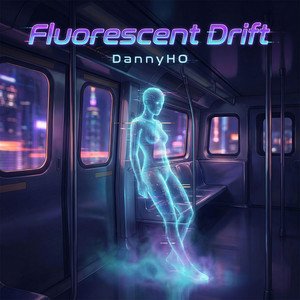
“Ride The Blue Line” makes its sharpest wound from a simple image: a carriage full of people looking down at glowing screens. The only eye contact arrives through the window reflection. The train is both public passage and private mirror, carrying a body home while forcing a consciousness inward. In “Stand Under Pale Lights,” the silent clerk who anticipates the Storyteller’s purchase offers an unexpectedly intimate form of recognition. Nothing is spoken, yet the gesture suggests that care can survive in brief, repeated rituals, even under the impersonal glow of a 24/7 store.
“Count The Falling Rain” deepens the album’s central dilemma. The desire to follow one raindrop to the street is a wish to disappear into anonymity, to fall out of the insulated high-rise self and merge with the human current below. But “Hear The Ancient Strings” interrupts that descent. Temple incense rising beside a digital stock ticker aligns old ritual with modern data flow, refusing the easy belief that technology and memory occupy separate worlds. Both are currents. Both carry longing.
3. SONIC ARCHITECTURE
The record’s 120 to 125 BPM melodic EDM pulse gives motion to stillness without turning vulnerability into excess. Muffled train clacks, MRT chimes, barcode-like hi-hats, rain, streetlamp hums, clattering bowls, sweeping brooms, footsteps, and steam hiss turn Taipei into percussion and atmosphere. Warm piano, acoustic guitar, analog pads, side-chained sub-bass, and progressive builds supply forward movement with gentle pressure rather than aggression.
At the center stands the human whistle, solitary and exposed, often braided with the Erhu’s weeping, vocal-like line. Their dialogue is crucial: one is breath, immediate and fragile; the other reaches toward an older emotional register. Vocal approaches shift with the night, from breathless whispers and lullaby-like head voice to grounded chant, airy release, and open belting. In Fluorescent Drift, production is not decoration. It is psychological weather.
4. THE PERSPECTIVE SHIFT
The final ascent toward “Hold The Morning Light” does not solve urban isolation by pretending the city has become gentle. It changes the angle of vision. From the mountain, the waking metropolis is no longer a trap but a vast breathing organism, full of separate lives carrying parallel burdens. For late-night commuters, remote workers, and quiet observers, this is the record’s tender argument: being alone in a crowd can hurt, but it can also reveal a shared condition. Morning arrives not as escape, but as the courage to re-enter the world with a truer sense of one’s place within it.