Liner Notes & Lore · October 24, 2026
The Architecture of Shared Muscle: MIRINAE and the Sacred Labor of the Cover Crew
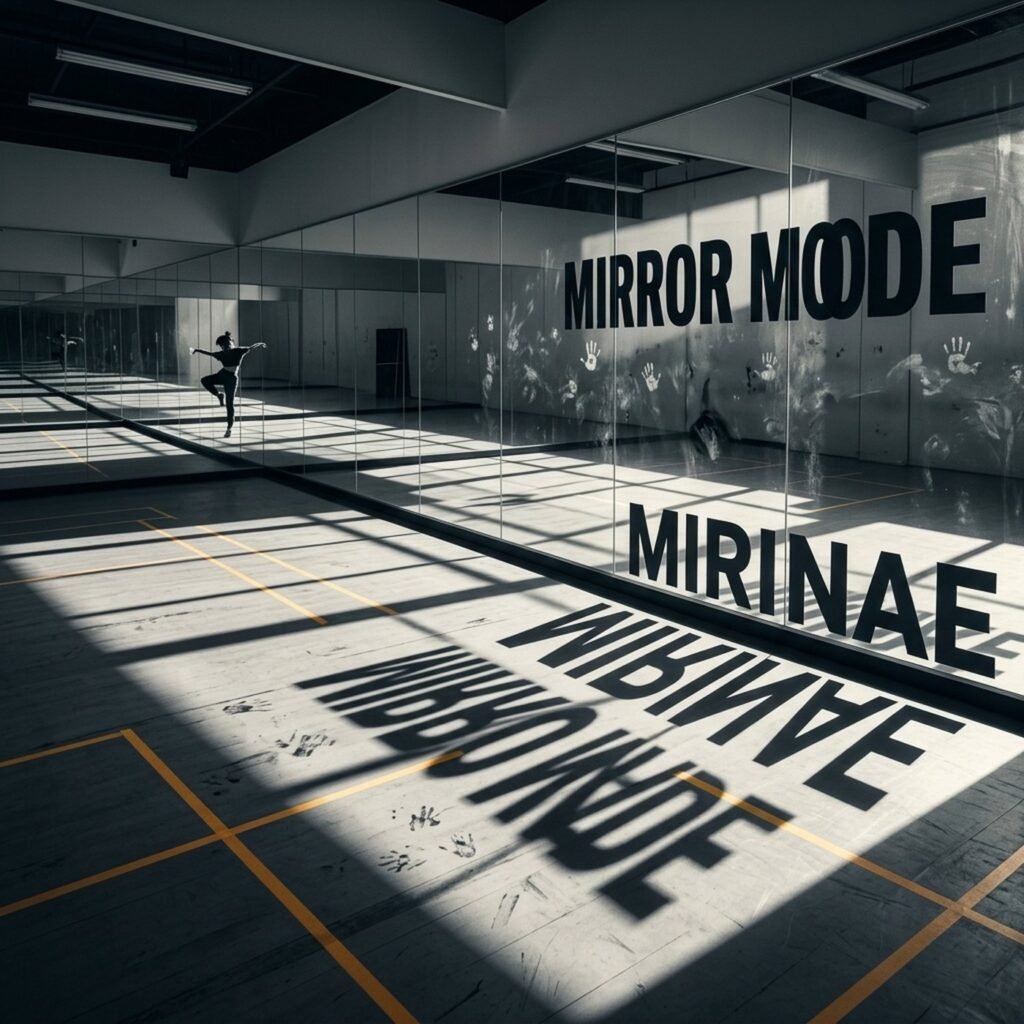
THE PROVOCATION
Commercial pop frequently sells the illusion that glamour occurs in a vacuum, immaculate and untouched by physical exhaustion. On MIRROR MODE, MIRINAE shatters that sleek facade to honor an unglamorous truth: music is not truly realized until it is metabolized by the human body. Grounded in the humid air of a rented provincial rehearsal space, this record asks what happens when choreography ceases to be passive digital content and becomes an act of communal endurance. A song does not belong to the broadcast feed that transmits it; it belongs to whoever bleeds their weekend wages to rent a linoleum floor by the hour, standing before an inverted phone screen to untangle left from right.
SYMBOLS & SUBTEXT
The emotional architecture rests on small, everyday thresholds. In “SEVEN : 엇갈린 호흡 (Tangled Breath)”, the late-night friction over a missed transition is never actually about the seventh count. The conflict is a sudden release of shared terror, an admission of vulnerability from four teenagers who fear their physical stamina will never match their ambitions. In “UNISON : 하나의 그림자 (One Shadow)”, this anxiety breaks open when the studio speaker abruptly cuts out mid-routine. Rather than crumbling, the dancers finish their final sixteen counts in lockstep, anchored solely by the percussion of their own breath and rubber against linoleum. By the time “BRONZE : 세 번째 자리 (The Third Step)” arrives, placing third on a regional stage is stripped of disappointment. The performers do not look toward the adjudicators; they look down at their identically scuffed sneakers, acknowledging that the real triumph is written in the friction of the floor.
SONIC ARCHITECTURE
Rejecting sterile digital aesthetics, the album anchors itself in a strict eight-count discipline tailored for physical practice. Organic textures form the rhythmic spine: genuine sneaker squeaks, handclaps, and warm deep house kicks ground the 128 BPM momentum of the opening track. The syncopation of UK garage drives the clumsy footwork of the second cut, while batchim-heavy Korean verses provide percussive micro-beats against soaring, English-anchored chorus hooks. Even as the production transitions into the half-time Rhodes warmth of ninety-six beats per minute, the audio preserves the hollow resonance of wooden floorboards beneath every downbeat.
THE PERSPECTIVE SHIFT
To anyone who has ever propped a phone against a water bottle to master sixteen bars of movement, MIRROR MODE transforms passive fandom into sovereign artistry. When “ECHO : 물려준 박자 (Passed Down Beat)” concludes the record by slowing its tempo for a thirteen-year-old novice, the narrative lineage closes. Performance is not a museum piece locked behind a glass screen. It is an inheritance passed between blistered palms, kept alive whenever someone counts out loud: five, six, seven, eight.