Album Story · October 25, 2026
The Room Where the Beat Was Learned
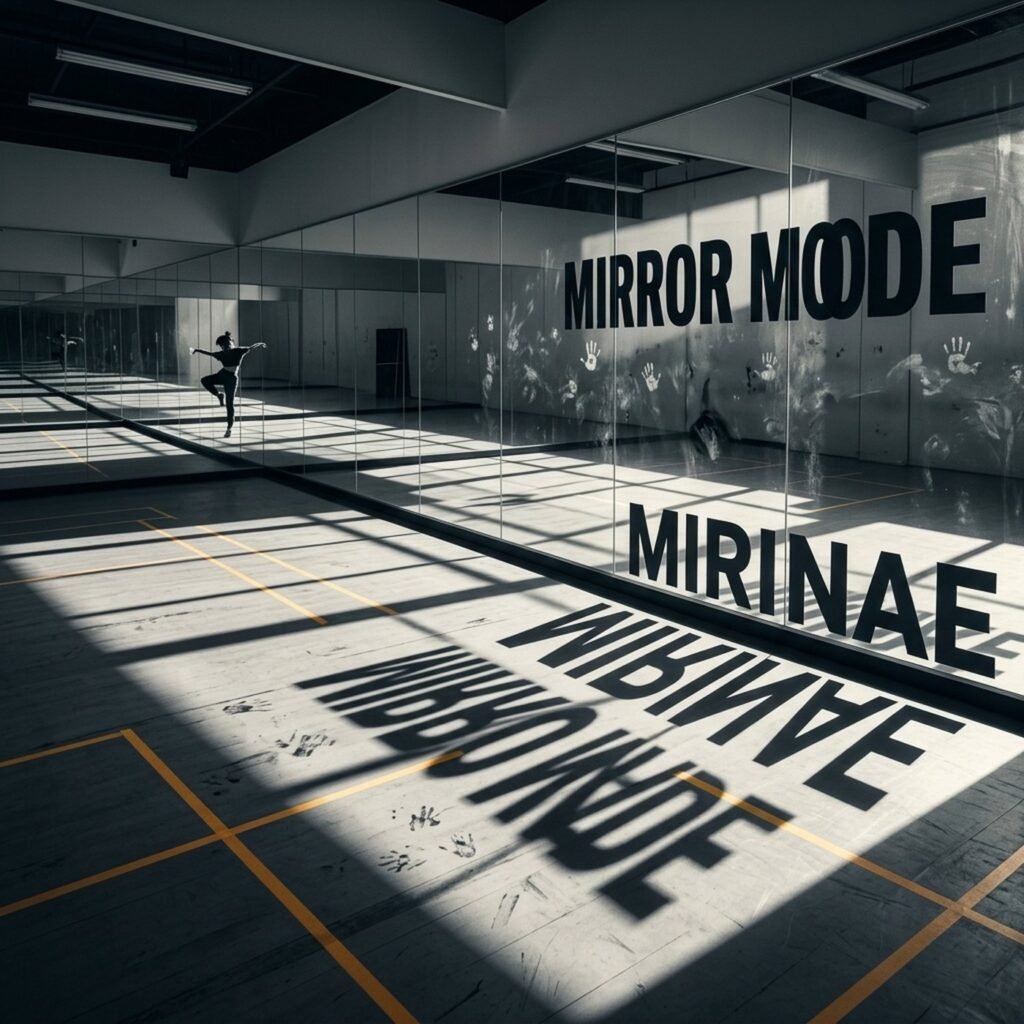
Before a single stage light, there is a rented practice room with a linoleum floor and a phone propped against the mirror. MIRINAE’s album MIRROR MODE begins in that exact room. “MIRROR : 낡은 나무바닥 (Old Wooden Floor)” opens with a seventeen-year-old trying to untangle inverted choreography. She keeps stepping left because the video is not mirrored. The 128 BPM kick moves like sneaker soles; the handclaps are not digital gloss but sweaty, wooden, real.
The crew gathers out of stubbornness, not polish. “SEVEN : 엇갈린 호흡 (Tangled Breath)” turns a missed seventh count into a late-night argument that is really about the shared terror of not being good enough. The overlapping vocal chops sound like people talking over each other under humid studio lights. Then “UNISON : 하나의 그림자 (One Shadow)” arrives: the fortieth take, the music cuts out halfway, and the four voices finish the last sixteen counts guided only by one another’s footsteps. That moment is the album’s glowing center.
What follows is not defeat. “BRONZE : 세 번째 자리 (The Third Step)” slows to a half-time groove and treats third place as a private triumph. The group does not look at the judges. They look down at their identically scuffed sneakers, a secret language of shared labor. Six months later, “ECHO : 물려준 박자 (Passed Down Beat)” returns to the same rented room and slows the counts for a thirteen-year-old beginner. The same old cue comes back: start left, no, right. The song no longer belongs to the original choreography. It belongs to whoever learns to move to it.