Liner Notes & Lore · May 31, 2026
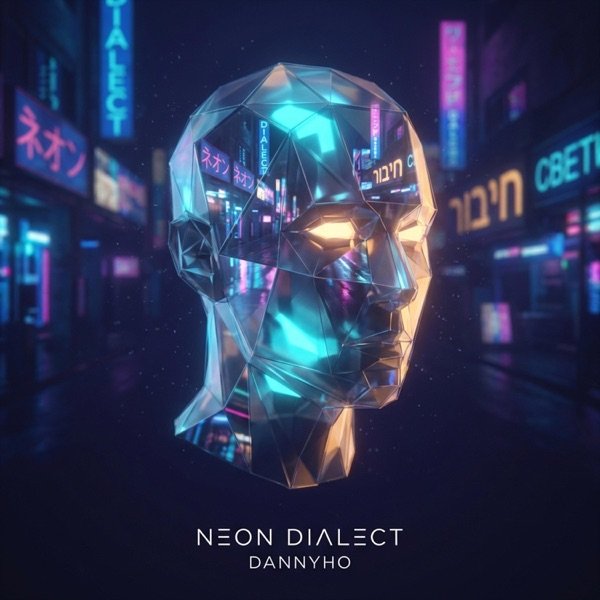
Neon Dialect, Notes on Love Without Translation

1. THE PROVOCATION
What happens when intimacy asks us to stop translating ourselves? Neon Dialect begins inside a familiar contemporary tension: the locked screen lighting up in public, the corporate voice polished to a shine, the home voice carrying history, rhythm, and contradiction. DannyHO treats bilingual romance not as a tidy meeting of two languages, but as a place where identity becomes fluid under pressure. The record understands that a text-situationship can hold enormous emotional weather. A mundane notification can become prophecy. A deleted voice note can contain more truth than a perfect confession. Love, here, is not defined by clarity alone. It is defined by the courage to remain legible without sanding away the parts that resist explanation.
2. SYMBOLS & SUBTEXT
“Signal in the Static” turns the illuminated phone screen into a small altar of projection. Its central thrill is almost comic in its vulnerability: one name appears, one ordinary question arrives, and the imagination writes an entire future around it. The ghost in the strobe light is not only the desired person. It is the self made restless by possibility.
On “Pero te quiero…,” the unsent voice note becomes a document of emotional self-censorship. The abrupt cut matters because it preserves the confession in its most fragile state, before language can be revised into safety. “Plastic Covers” deepens the album’s cultural argument. What initially feels embarrassing to the protagonist becomes comforting to the partner, revealing how inherited domestic symbols can cross backgrounds without becoming identical. Recognition does not require sameness. It requires attention.
3. SONIC ARCHITECTURE
This album builds its emotional argument into its materials. Cold digital artifacts, iOS keyboard clicks, notification chimes, 808 weight, and the recurring voice-note record tone meet congas, cajón, nylon-string guitar, flamenco gestures, and the lived-in texture of room sound. The friction is deliberate. In “No Subtitles,” rigid electronic discipline gradually yields to a looser human pocket, while the vocal moves from clipped professional precision toward a fuller voice that can breathe. “Red Bar Romance” makes emotional shutdown audible through glitching pads and rain-like rhythmic detail. By the title track, the split has dissolved: acoustic guitar, synth bass, dembow, chimes, and self-harmonized vocals speak as one grammar.
4. THE PERSPECTIVE SHIFT
Neon Dialect refuses the old assumption that mixed language signals confusion or compromise. It presents code-switching as intelligence, flirtation, survival, and craft. “Subtitles (Off)” identifies the harshest translator as the internal voice that keeps demanding explanation, then chooses to silence it. The final movement, from “Gate C5” to “Solar Dialect,” replaces nostalgia with a more difficult tenderness: a future built not on idealized origins or neon fantasy, but on ordinary, shared presence. For anyone learning how to love across screens, families, accents, and versions of themselves, this record offers a radical permission. Keep the words that do not fit neatly. They may be the truest ones.