Liner Notes & Lore · July 24, 2026
The Heartbeat Beneath the Neon Static

THE PROVOCATION
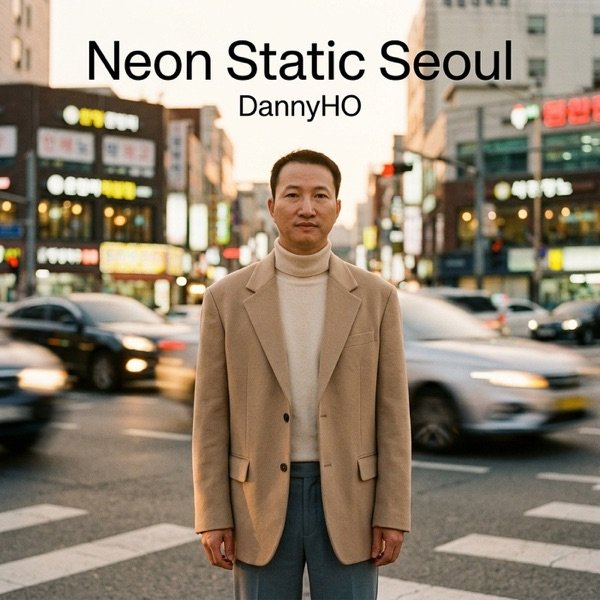
DannyHO’s Neon Static Seoul is not a party record. It is a confession whispered into the chest of a warehouse kick drum. The premise is deceptively simple: one night, one city, one romantic observer trying to locate a pulse that is not synthetic. Yet the album refuses to celebrate hedonism or mourn it. It interrogates the collision between digital acceleration and analog longing, asking whether stillness can survive inside a 128 BPM heartbeat. The protagonist moves from a cramped Hongdae apartment to the Gangnam floor, through viral choreography and soju-fueled percussion, only to find that the loudest room is often the loneliest confessional.
SYMBOLS & SUBTEXT
Three tracks expose the hidden architecture of the night. “Concrete Heartbeat” reframes the bassquake as a panic attack synchronized to the beat, the off-beat thump becoming the body’s own alarm. The club does not cure anxiety; it amplifies it until catharsis feels indistinguishable from collapse. “Green Glass Symphony” builds its rhythm from bottle pops and glass clinks, turning social lubrication into a fragile percussion loop. The lyric asks who at the table is actually a friend, and the answer is written in the fizz of empty soju bottles. The title track “Neon Static Seoul” begins with raw, uncorrected piano and ends with a synthesized heartbeat slowly overtaking the acoustic warmth, a spectral analysis of the city reclaiming the narrator. The digital assimilates the analog, but the vulnerability remains audible in every crack of the vocal.
SONIC ARCHITECTURE
The production strategy is a war of textures. Scouse House’s off-beat bass and high BPM provide the skeleton, but DannyHO wraps it in warm Juno-style analog pads, detuned and drenched in chorus. The recurring subway announcement chime, warped into a lead melody, grounds the futurism in civic routine. Vinyl hiss and tape saturation coat the digital drums, giving every 808 a memory. Field recordings of Seoul traffic swells and distant club thumps bleed into the mix, while foley percussion (pouring liquid, bottle pops, glass clinks) appears as a percussive language of consumption. Vocal delivery shifts from intimate spoken word to breathless rhythmic verses, from R&B croon to raw, uncorrected piano ballads. The album’s emotional range is carried not by genre but by the contrast between cold precision and trembling human breath.
THE PERSPECTIVE SHIFT
Neon Static Seoul challenges the listener to treat the club as a site of emotional processing rather than escape. For the introverted extrovert, the album validates the solitude that exists inside a crowd, the beauty of a connection that lasts exactly one song, the necessity of the quiet taxi ride home. It proposes that synthetic sound can carry analog longing, that a warped subway chime can sing like a lost lover, that a high-pitched tinnitus sine wave can harmonize into a lullaby. The album ends where it began: a cyclical sample that resets the narrative. The night repeats, but each repetition offers a new chance to discern the difference between neon static and the heartbeat beneath it.