Liner Notes & Lore · November 15, 2026
A Single Güiro Outlasts the Names on the List

The Güiro Kept Its Place
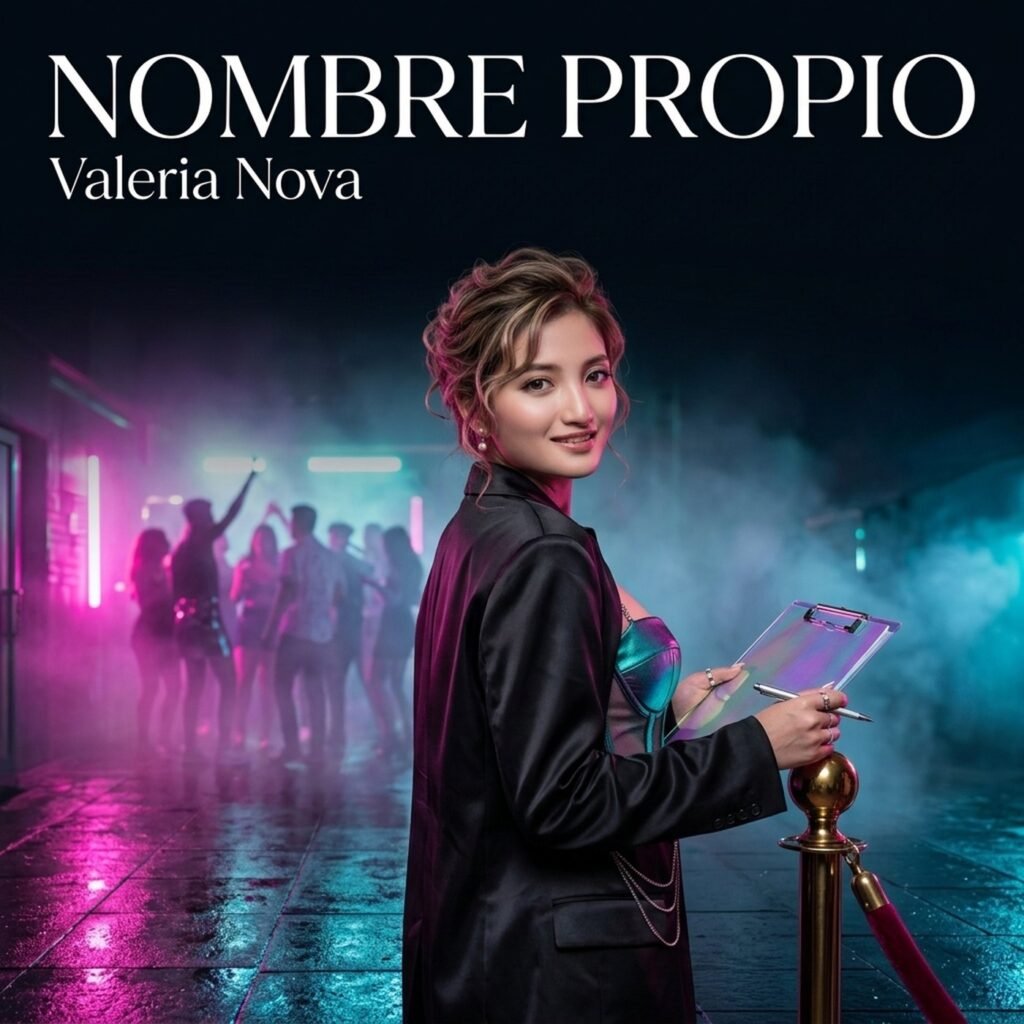
A single güiro and one hand-percussion pairing hold the rhythmic center of NOMBRE PROPIO. Valeria Nova spends twelve tracks refusing two easy inheritances: the accordion that often carries cumbia melody and any guest voice that might dilute the story. Instead, the bass guitar behaves like a second singer. It threads through clean electric guitar figures and restrained keys, answering the vocal rather than simply padding the low end. That decision matters more than it first appears. The güiro is not a tambourine or a shaker tossed in for texture. It is the album’s constant witness, filtered in some tracks, softened in others, pushed to the front when the protagonist finally stops holding other people’s names. That filter is not just a mixing choice. It is the sound of a person stepping out of the center of her own song. Three songs make the architecture visible.
Tu Risa de Barro
In “TIZA Y CARTÓN,” the key lyric arrives as a small, worn accusation: “tu excusa de siempre, tu risa de barro.” The words pretend to be about the faces in the queue, but the arrangement blurs the target. The cumbia percussion loop is skeletal, the güiro filtered until it feels distant, and a deep, rounded urban sub-bass presses from underneath. Without accordion, the melody leans on the bass, which moves like a thought the speaker will not say aloud. The song sounds as if it is heard through a wall: percussion ticks, keyboards stay restrained, and the low end is the only thing allowed near. That distance is exactly the point. The title suggests chalk and cardboard, the cheap materials of a sign that tells people where to stand. The lyric hides a quieter confession beneath its apparent control: she has memorized their excuses, their faces, their habits, but she is not inside their lives. The phrase “risa de barro” gives the game away. A laugh made of mud is shaped too fast, brittle at the edges, and the production agrees by refusing to let the track brighten. The güiro never clears. It stays behind the filter, a rhythm that can be felt but never fully seen.
No Quedara Marca
“BUENAS NOCHES” is the album’s interior pause. The production notes point to deep controlled bass, intimate bachata-derived guitar figures that feel like a conversation, and a restrained bongó. The key lyric, “no porque en tu memoria quedara una marca,” is whispered close to the microphone, fragile and low. What the line hides is the wish it negates: to say no mark would remain is to admit she wanted one. The music does not contradict the words with drama. It agrees with the flatness. The guitar phrases trade back and forth like a conversation she cannot enter, while the bongó stays at the edge of audibility. Electronic negative space surrounds the vocal, wide enough to feel like being ignored. The title is a greeting, but the song treats it as something said to her, not something she says. If he had ignored her, the story would be about guilt. Because he says good night without slowing, she becomes furniture. The restrained bongó does not rise. The bass does not argue. The arrangement understands that real erasure is not loud. It sounds like someone passing by.
Me Dio Risa Tanta Ceremonia
“NOMBRE PROPIO” reverses the production’s shyness. Where earlier tracks filter the güiro or hold the bongó away, the title track lets the cumbia pop arrangement open. The kick is punchy, the bassline bright but never aggressive, and the güiro returns crisp and present. The key lyric, “Me dio risa tanta ceremonia:” sounds at first like a dismissal, but the arrangement reveals what she is actually laughing at. This is not a climax built on volume. The production stays expansive and clean, no guest features, no borrowed weight. The absence of accordion matters most here: without that familiar melodic voice, the song has to make its own center, and it does with her voice, the clean guitar, and the bass as a second melody. The twist in the lyric is that crossing the threshold feels ordinary. The music agrees by not pretending otherwise. A lesser arrangement might have pushed the final chorus into elation. Valeria Nova holds the song at a bright, level altitude. The ceremony is laughable because the room was only ever a room. The güiro proves it: the same pulse that was filtered and dragged all summer never needed to become something else. It just needed to stop being hidden.
Empty Hands at Closing Time
After the three close readings, the record offers an idea its surface does not advertise. The door was never the real barrier. The summer’s lesson is that proximity is not participation, and a clipboard can become a false name. The final track, “MANOS LIMPIAS,” removes the last of the props. The güiro is soft, the bass sits gently, and the line “The night is done with all its noise” lands without a drop or a crescendo. There is no accordion to carry the melody home, no featured voice to confirm the choice, no guest to applaud the exit. The empty hands in the title are the heaviest thing she carries. It is the exact opposite of the door’s petty authority: she leaves the venue holding only herself, and the rhythm stays alive under that emptiness. The güiro, the album’s witness from the first chain to this final street, becomes a heartbeat in the last mix. Nothing on the record crowns the moment. The music simply keeps walking, clean and warm, with no inventory left to protect.