Liner Notes & Lore · May 31, 2026
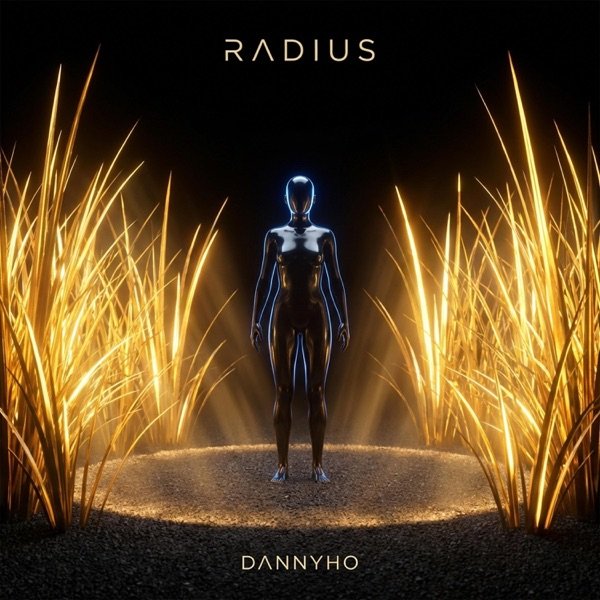
Radius: The Circle That Holds

1. THE PROVOCATION
Radius begins with a question that modern life makes difficult to ask: what if retreat is not defeat? In a world of constant alerts, public judgment, and exhausting visibility, this record imagines a return to a rural hometown as an act of discernment. The protagonist crosses back through “City Limits Sign” carrying the static of elsewhere, only to find that the boundary is not a cage. It is relief. DannyHO’s Radius argues that justice can be protective rather than punitive, and that loyalty can be a form of shelter. The town’s power is not spectacle. It is the quiet decision to close ranks around the people it recognizes as its own.
2. SYMBOLS & SUBTEXT
“Radius of Recognition” turns the small town’s most uneasy feature into its tenderest revelation. At first, the whispers suggest surveillance, old mistakes, and the claustrophobia of being known too well. Then the meaning shifts. The community is not rehearsing a verdict, it is preparing a defense. Recognition becomes an act of care.
“Glass Fortress” deepens that moral ambiguity. Its fortress is made of glass because no violence is required for its boundary to be felt. The outsider who threatens the town’s peace is not confronted with a dramatic punishment. Instead, the social world simply withdraws its attention. The song portrays emotional exclusion as both potent and unsettling, asking listeners to consider the ethics of a sanctuary that survives by deciding what it will not admit.
In “Anchor Stone,” permanence receives its final correction. To be planted is not to be trapped. The gravel, porch lights, rusted metal, and open air throughout the album become emblems of a life with weight, friction, and chosen responsibility. The ground holds because it is real.
3. SONIC ARCHITECTURE
The production builds a convincing meeting point between clean electronic precision and human-weathered texture. Wind moving through tall grass returns as a rhythmically gated pulse, turning the album’s central field recording into both breath and infrastructure. Gravel crunches become percussion. Doorbells, spoon clinks, foot taps, porch creaks, fire crackle, and rusted-metal impacts give the beats a tactile local memory.
Around those details, warm analog bass, Wurlitzer chords, treated acoustic guitar, felt piano, orchestral swells, crystalline plucks, and side-chained synth pressure create an emotional scale that moves from private apprehension to communal force. Vocals follow the same arc: breathless spoken-sung intimacy, low reassuring croons, sharp rhythmic phrases, fragile head voice, and finally stacked harmonies that sound like a crowd gathering without needing to announce itself.
4. THE PERSPECTIVE SHIFT
For listeners burned out by hyper-connectivity, Radius offers no fantasy of total isolation. Its answer is more demanding and more generous: find the people who know your faults, hear your need beneath the noise, and still make room at the table. The album challenges the assumption that freedom means endless escape. Sometimes freedom is a circle, clearly drawn, fiercely guarded, wide enough for trust to return. Its final sense of euphoria comes not from leaving the world behind, but from discovering where one can stand inside it without bracing for impact.