Liner Notes & Lore · January 12, 2026
Seoul Frequency: Notes From a City That Never Sleeps

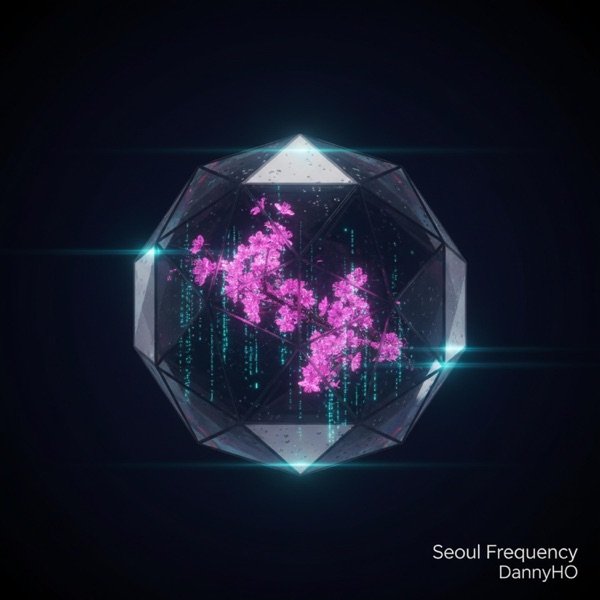
1. THE PROVOCATION
Seoul Frequency asks an uncomfortable question of contemporary city life: what does closeness mean when every screen promises access, while the body remains alone? DannyHO places a solitary figure inside Seoul’s sleepless circuitry, where subway chimes, rain, traffic, club bass, and fluorescent convenience-store light become forms of company. The record does not romanticize isolation. It lets the night feel crowded, expensive, overstimulated, and strangely seductive. Its protagonist moves through the city seeking relief from thought, only to discover that distraction has its own loneliness. For anyone driving with no destination after midnight, or bracing for another week before Sunday has fully ended, this is an album about surviving the hours when silence becomes too articulate.
2. SYMBOLS & SUBTEXT
“Neon Pixels” turns the Hongdae crowd into a glitching screen, a sharp image of digital-era intimacy. The people surrounding the narrator are visible but unreadable, present as motion rather than contact. The song’s future bass lift does not solve that fracture. It suspends it, allowing sensory overload to become a temporary kind of surrender. In “Bass Therapy,” the club drop carries an even more revealing purpose: it saves the narrator from having to speak to the person he arrived with. Bass becomes refuge, but also avoidance. Its physical force offers an excuse to remain emotionally untranslated. Then “Cafe Ghost” reverses the usual breakup narrative. The ghost is not the absent former lover, but the self that once existed beside them. A scrolling thumb becomes a metronome for grief, measuring the distance between who someone was online, who they were together, and who remains in the café now.
3. SONIC ARCHITECTURE
The album’s architecture mirrors its emotional descent and return. A recurring neon synth begins as a bright arpeggiated signal in “Neon Baptism,” like lights switching on across dusk. It grows distorted in the club-centered middle of the record, then settles into a muted warmth by the final dawn. This changing texture gives the city a pulse and a memory. Field-recorded details, subway chimes, rain on pavement, distant traffic, automatic doors, boiling water, and espresso hiss, keep the electronic production tethered to physical space. Progressive house glides rather than detonates. Future bass pumps with anxious momentum. Saturated 808s and filtered leads create the numb gravity of the club, while acoustic guitar, felt piano, electric piano, strings, and clean guitar gradually open the record toward air. Throughout, dry intimate vocals remain close to the listener, a human voice refusing to be swallowed by reverb.
4. THE PERSPECTIVE SHIFT
Seoul Frequency does not argue that technology has replaced connection, nor that solitude is inherently noble. Its deeper claim is more difficult: isolation can become a threshold, if we stop treating it only as a defect to be repaired. “Bin Cha (빈 차)” finds comfort in purposeless motion. “Empty Kings” recognizes beauty in a city after its performance has ended. “Pyun” turns instant ramen at 4:30 AM into a small sanctuary. By “5:32 AM,” dawn is not a grand rescue. It is proof of endurance. The night happened. The city kept breathing. So did you.