Liner Notes & Lore · April 9, 2026
Serotonin Skyline, Notes from the Clinic Beneath the City

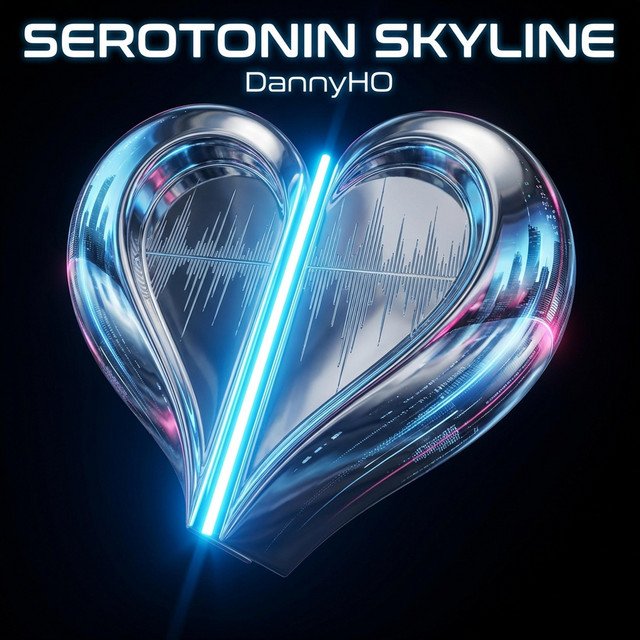
1. THE PROVOCATION
What if exhaustion is not a private failure, but a civic condition etched into the body? Serotonin Skyline begins there, in the mechanical aftertaste of work, where a person leaves the office carrying more than fatigue. He carries static. Notifications in the blood. Fluorescent dread in the lungs. The album’s central revelation is quietly radical: relief does not arrive through retreat, but through movement. DannyHO treats the dancefloor not as spectacle, but as corrective architecture, a place where rhythm reorganizes a fractured nervous system. This is not nostalgia for nightlife. It is a theory of survival. The record proposes that the body, when pushed to numbness, may still remember how to return to itself through pulse, repetition, breath, and shared motion.
2. SYMBOLS & SUBTEXT
“5:01 PM (The Transmutation)” is the hinge on which the whole narrative swings. Its office noises are not clever decoration, they are the sound of captivity being repurposed. Keystrokes, staplers, and air-conditioning hum become percussion, which means the machinery of depletion is forced to serve pleasure. The song’s twist is moral as much as musical: the worker is not rescued from the system, he steals energy back from it.
“Funk Deficiency” sharpens the album’s satire. Waiting in line feels like triage, but the diagnosis is not illness in the clinical sense. It is deprivation of joy, touch, groove, communal release. By framing pleasure as treatment, the track exposes how barren adult life can become when function replaces feeling. The whisper turning into falsetto is the sound of shame losing its grip.
In “Last Track Mercy,” the plea to the DJ is really a plea against time itself. It understands that healing is sometimes brief, fragile, almost impossible to hold. That desperation matters. The song refuses the fantasy of permanent transcendence and instead honors the human need to beg for one more minute inside the feeling that saved you.
3. SONIC ARCHITECTURE
The album’s design is exacting. A heartbeat kick drum recurs like a biomarker, speeding with anxiety, settling into excitement, translating psychology into groove. Quincy-era finesse meets French House abrasion: slap bass and walking basslines, dry drums, crisp handclaps, Rhodes warmth, brass stabs, disco strings, filtered synth pressure. The shimmer synth introduced at the beginning hangs over the record like distant city light, then returns at the end transfigured, no longer cold, no longer unreachable. Vocally, the arc is just as precise. Mutters become belts. Whispers bloom into stacked harmonies, falsetto, gospel calls, breath as rhythm, strain as release. Every texture moves from constriction toward width.
4. THE PERSPECTIVE SHIFT
This album challenges the tired division between escapism and seriousness. It argues that dancing can be thought, that sweat can be philosophy, that a crowded room can function like grace. For adults living inside burnout, Serotonin Skyline offers something more demanding than comfort. It asks whether healing might require participation. Not passive listening, but surrender. Not disappearance, but embodiment. By the time morning arrives, the city has not changed. The listener has. And sometimes that is the only revolution available before sunrise.