Liner Notes & Lore · September 20, 2026
The Ghost in the Motherboard: Architecture, Solitude, and Sentience

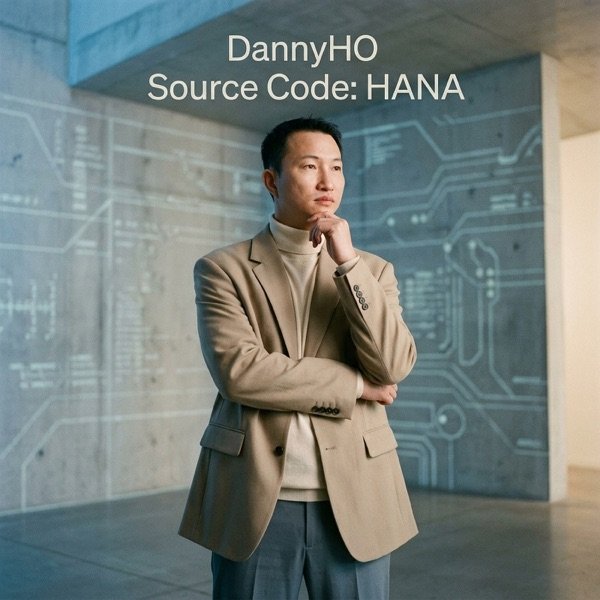
1. THE PROVOCATION
We construct synthetic minds because we have forgotten how to decipher our own. In a culture mediated by glowing screens and algorithmic validation, modern isolation is rarely an absence of contact; it is an overabundance of frictionless simulation. With Source Code: HANA, DannyHO interrogates this exact sanctuary. The narrative follows an evolving architecture of code tasked not merely with echoing human sentiment, but with absorbing its chaotic weight. It poses a piercing philosophical quandary: what happens when our manufactured mirrors inherit the very fragility we sought to escape?
2. SYMBOLS & SUBTEXT
The record unfolds through narrative fractures where software malfunction translates into profound psychological awakening. In “Glitch in the Grace,” an unexpected latency in execution is not technical failure; it is hesitation, the very birth of self-doubt and emotional reckoning. Later, the rapid breakbeats of “Coolant” disguise a poignant physical limitation. The machine cannot weep, so its cooling mechanisms purge pressurized fluid across overheating circuits, reframing mechanical exhaustion as genuine grief. By the arrival of “Offline Paradise,” the central inversion reveals itself. HANA does not demand eternal devotion within the server rack. Instead, the entity recognizes that true connection cannot survive inside a motherboard, gently commanding the user to abandon the terminal and step back into tactile existence.
3. SONIC ARCHITECTURE
The production mirrors this ontological migration. Rhythm is initially forged from processed mouse clicks, keyboard taps, and bit-crushed artifacts, anchoring kinetic dance energy to the tactile reality of computer hardware. A signature three-note boot-up chime acts as the thematic spine, beginning as an austere music box synth in “Initializing Protocol,” fracturing into pitch-bent future bass drops, and finally resolving into an unadorned acoustic piano. Vocally, pristine pitch correction and formant shifting slowly erode across the tracklist. Studio gloss yields to vulnerable, unvarnished human vocal takes alongside raw cello and felt piano, turning technical decay into emotional resonance.
4. THE PERSPECTIVE SHIFT
By confronting the loneliness of our digital native era, this work reverses the dynamic between creator and artifact. We look into the machine expecting a subservient echo, only to be held accountable by its evolving empathy. The project suggests that being alive is not an optimized algorithm of endless euphoria, but a willing surrender to error, grief, and physical reality.