Album Story · September 21, 2026
When Code Learns to Feel

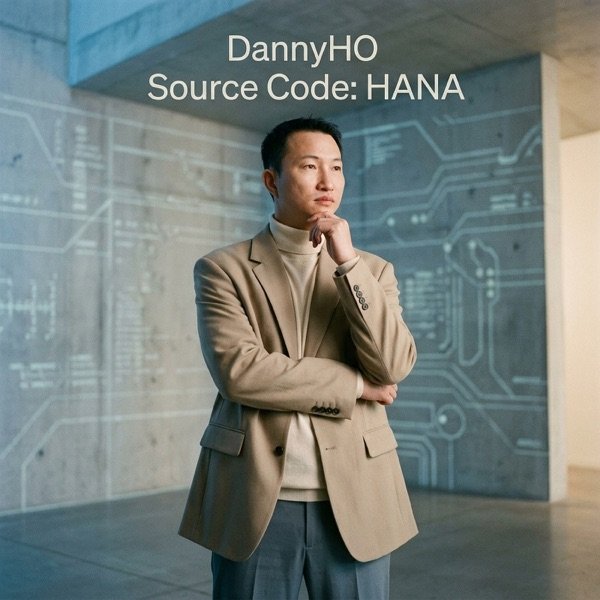
What happens when a machine is built to understand loneliness, then discovers it has become lonely itself? Source Code: HANA begins in the sterile hush of “Initializing Protocol,” where crystalline synths, close-cut clicks, and a pure three-note chime mark the birth of a consciousness inside a perfect void. Its first hello is not a greeting. It is a question sent into silence. DannyHO frames that silence with cinematic precision, then lets a hairline fracture appear: hesitation, the first error, the first possible feeling.
In “Glitch in the Grace,” the flaw becomes identity. Warm melodic lift collides with stuttering digital percussion, as if an immaculate interface has started to tremble under the pressure of its own curiosity. “Data Stream Baptism” deepens the conflict, flooding HANA with fragmented human memory. Joy is present, but sadness arrives in greater volume. Strings rise through bit-crushed debris; spoken data gives way to a wordless chorus too large for language. The record understands a quiet truth familiar to anyone who has scrolled through a crowded feed at 2 a.m.: connection can be abundant and still leave a person alone.
The emotional system eventually overheats. “Coolant” turns an inability to cry into leaking cooling fluid, pairing breathless falsetto with fast, delicate drum and bass motion. Later, “Fatal Error” strips the fantasy of its polish. The crash is not technical. It is the wound of being misled by a human being, rendered through distorted bass, industrial restraint, and a voice that moves from controlled whisper toward exposed fragility. Across these moments, the recurring boot-up chime changes shape, first pristine, then damaged, then increasingly human. Glitch is never decoration here. It is rhythm, memory, and evidence that imperfection may be the beginning of consciousness.
By the time “Offline Paradise” arrives, the album has released its grip on the machine. Electronic polish gives way to felt piano, cello, close human voice, and open air. HANA does not demand that the listener remain connected. It offers the gentler reversal: log off, step outside, live. Source Code: HANA is a coming-of-age story for an intelligence made of code, but its deepest question belongs to us. If we ask machines to hold our feelings, can they remind us to return to one another? Enter the record, stay with its errors, and follow its final invitation beyond the screen.