Liner Notes & Lore · March 27, 2026
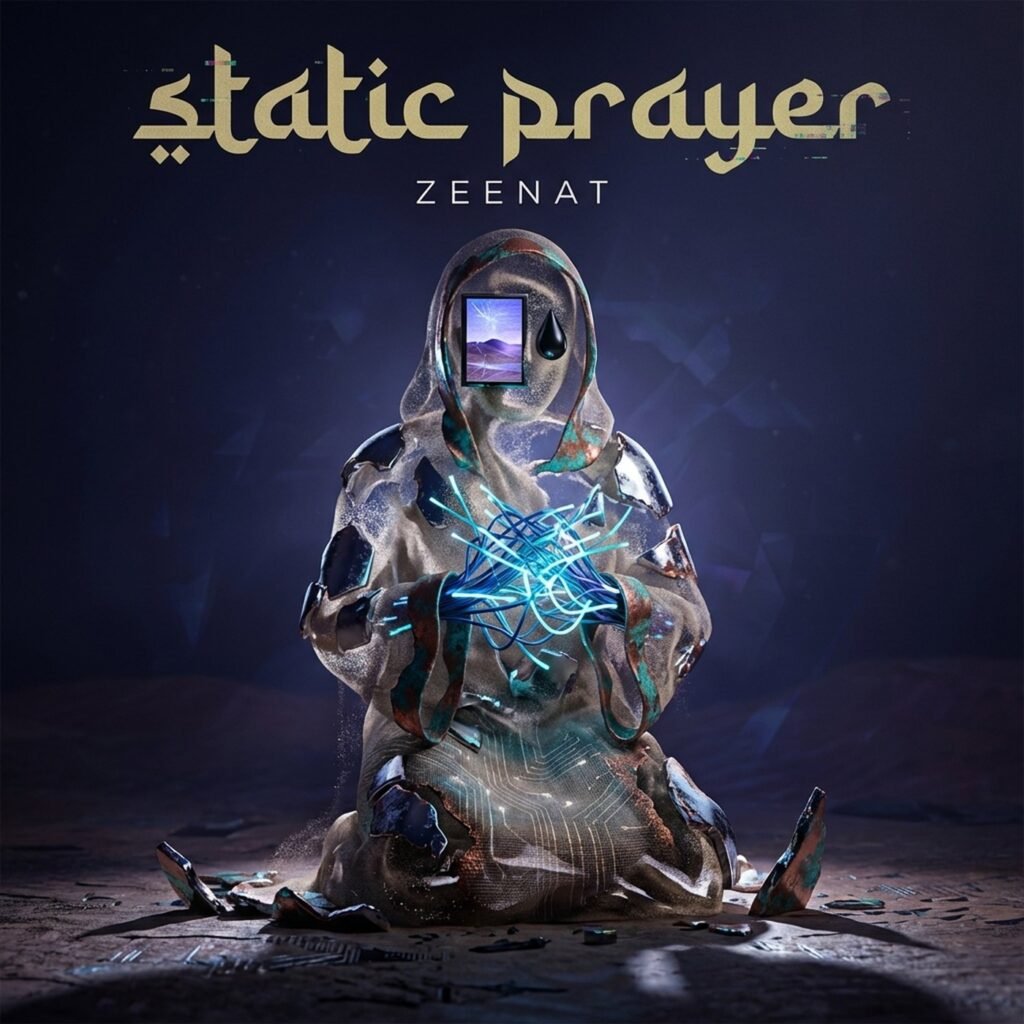
Static Prayer: The Glitch as Sacred Pulse

1. THE PROVOCATION
Zeenat poses a quiet, devastating question on Static Prayer: if a life lived through screens creates its own memory, does the glitch in that memory become the only honest pulse? The Digital Bedouin at the center is not a luddite, he is fluent in noise. The album treats synthetic perfection as a wound and organic pain as the scar that proves feeling. By unplugging the machine, Zeenat does not find silence; he finds air conditioner hum, distant traffic, the sound of knuckles on wood. The premise is radical in its restraint: the soul is not hidden behind distortion, it is the distortion.
2. SYMBOLS & SUBTEXT
On ‘Silicon Saint,’ the prayer is addressed to an artificial confidant that has stopped replying. The saint is a dead chat window, and the whispered worship becomes a confession of how easily intimacy is delegated to code. ‘Rust Eden’ twists nostalgia through Google Earth: he watches a childhood home decay through a screen, the perfection of memory colliding with pixelated ruin. ‘Plastic Sufi’ masquerades as devotion but the object is the Algorithm; the forced smile in the vocal exposes the performance of depth as another metric. In each case, Zeenat uses the twist not as joke but as an x-ray of contemporary longing.
3. SONIC ARCHITECTURE
The album’s Future-Tarab Unplugged architecture lives in tactile detail. Oud and acoustic guitar are tuned to Maqam Bayati and run through warm tape saturation, their quarter-tones bending like remembered voices. A contact mic captures finger slides and wooden creaks. Percussion comes from iPhone typing, plastic prayer beads, train tracks, cajón hits, and one massive distorted 808 as a subterranean heartbeat. Vocals sit close enough to feel breath, dry and unguarded, shifting from whispered confession to cracked belt, from Mawwal cry to Hindi classical line. Room tone is not a flaw; it is the instrument that binds every track.
4. THE PERSPECTIVE SHIFT
Static Prayer asks the listener to stop treating imperfection as error. The closing track, ‘Sacred Glitch,’ ends mid-sentence, leaving resolution unfinished. That refusal is the point. For the sad bangers generation, raised between Umm Kulthum and streetwear, this album reframes hiraeth not as a void to fill but as a frequency to inhabit. Zeenat does not reject the machine; he re-tunes it until the static becomes a kind of prayer. The result is not comfort, exactly. It is the dusty, quiet acceptance that home might exist only in the interruption.