Album Story · January 20, 2026
The Glass Cage: Thirteen Stations of a Digital Detox

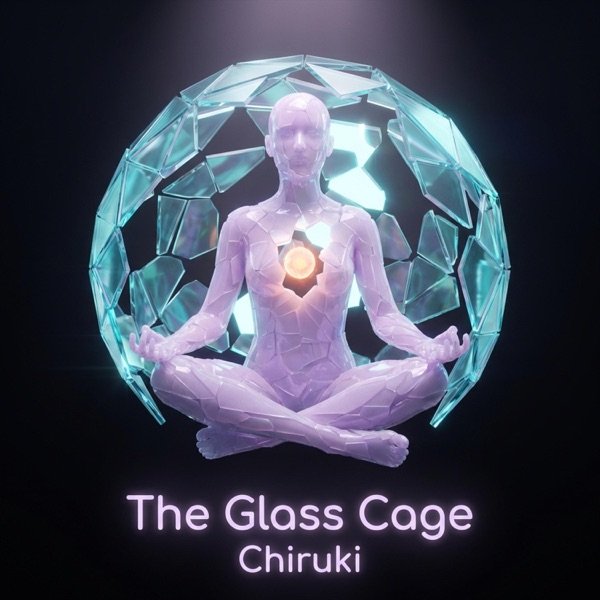
Chiruki’s album The Glass Cage opens inside a bedroom lit only by notification blue. In “Neon Eucharist,” the morning begins not with sunlight but with a feed refreshed like a ritual, haptic buzzes and synthetic pings stitched into the percussion as if anxiety itself learned to keep time. The production is claustrophobic, hyper-stimulated; vocals arrive auto-tuned and layered, artificial by design. Here self-worth is a number, and the protagonist lives vicariously through strangers whose curated perfection becomes a silent accusation.
Envy curdles quickly. “Story Ring” watches a rival’s silhouette season through a window; “Carrion Club” confesses the ugly thrill of waiting for successful people to fall; “Counterfeit Waltz” builds a fake persona bright-lit and wired. The act collapses in “Blue Screen Halo,” a thunderstorm inside the head where flashing angles and disorienting glitches force a public breakdown. Digital exile follows, not chosen, but survived.
The second act strips the set bare. In “Paper Tweet,” a grey rainy morning holds only a chair and a window; the vocals dry out, intimate and unguarded. The title track, “The Glass Cage,” turns a crowded restaurant into muffled evidence that without the feed, many connections were only paper. Yet clarity begins in “Fluorescent Clarity,” under harsh grocery-store light, where the so-called perfect people look exhausted and hollow. The comparison machine loses its power.
By the final act, the synthetic percussion has vanished. “Cracks in the Mirror” finds worth in dusty, sunlit flaws; “Bare Hands, Wide Sky” walks through a garden after rain, wet and green, with room bleed and natural breath replacing compression. “The Grass Is Green Enough” closes the jealousy detox with a sunny backyard barbecue, real laughter in the air, and “The Drawer’s Quiet” puts the machine to sleep like a lullaby. This is an album about alchemizing bitter envy into radical self-acceptance, not by winning the game, but by walking off the field. Put the screen down. Let the record hold you in the tangible present, one unedited breath at a time.