Liner Notes & Lore · July 24, 2026
The Ghost in the Feed: DannyHO’s The Viewing Party

THE PROVOCATION
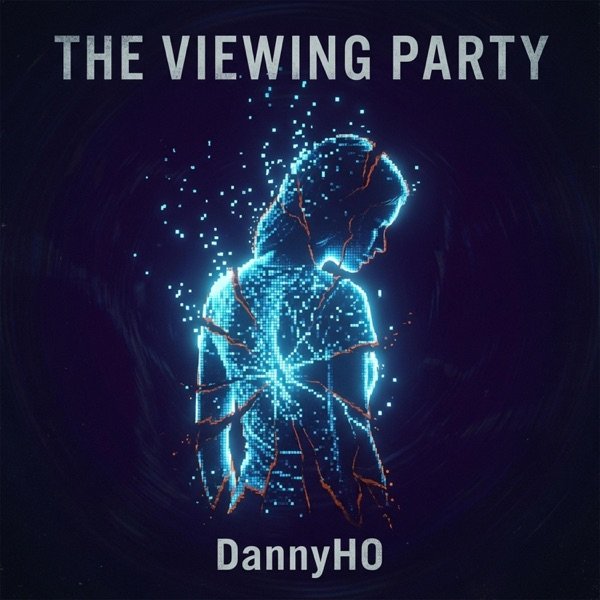
DannyHO’s The Viewing Party is not a breakup album. It is a forensic study of watching yourself become a ghost. The record follows a nineteen-year-old protagonist in the liminal stretch after high school, when the hometown becomes a surveillance state and every corner holds a version of the person you used to be. What makes this work so unsettling is that the pain is self-inflicted. The ex-boyfriend is not a villain but a screen, a mirror, a trigger. The album asks a brutal question: is a person who stops checking their phone still heartbroken, or have they lost the only proof that they ever mattered? The performances of grief, revenge, healing, and indifference all blur into the same feed, leaving the listener to question which version of the self is real.
SYMBOLS & SUBTEXT
Take Blue Light Bleed. The protagonist scrolls not for proof he is happy, but for proof he looks tired, miserable, diminished. The twist is not that he moved on. It is that she wanted him to be broken too, and that desire is the actual wound. Gilded Crack inverts the trophy into a curse: the secret she reveals rewrites his image, turning the collected object into a receipt that retells the story from a different angle. And at the album’s center, Oscar performance turns the viewing party outside in. The couple is not the spectacle. Everyone is watching her, waiting for the break. The protagonist’s devastation becomes the role she knows best, and the twist is that performing pain is the only way she knows she still exists.
SONIC ARCHITECTURE
The production is the emotional architecture. Organic warmth collides with digital rot: a felted upright piano, close-miked acoustic guitar, and nylon strings struggle against bit-crushed drums, screen-lock clicks, and camera shutter hits that slice through the mix like intrusive thoughts. Vocals begin dry, close, ASMR-adjacent, then dissolve into cathedral reverb, simulating dissociation. In Ghost in the Aisle, grocery scanner beeps become hi-hats and a freezer door thud becomes the kick. In the final Glitch in the Memory, the rhythm of a thumb tapping glass propels a wall of sound that severs mid-measure. These are not gimmicks. They are the sound of a panic attack in a silent, blue-lit room.
THE PERSPECTIVE SHIFT
The Viewing Party challenges the listener to see that moving on is not about forgiveness. It is about rendering the past irrelevant. The ex is still alive, accessible, one tap away. The protagonist must learn to stop being the audience. The album ends not with closure but with a mid-sentence cut, implying the story continues somewhere else. The listener is left with a choice: keep watching, or walk away.