Liner Notes & Lore · September 5, 2026
Velvet After Hours: The Bravery of Softness
1. THE PROVOCATION
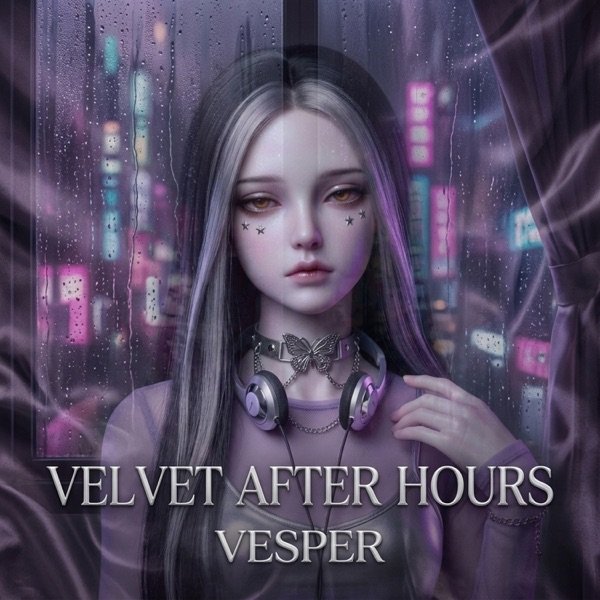
Velvet After Hours begins with a difficult question: what if independence, when performed too perfectly, becomes another name for emotional starvation? The record lives between the unanswered message and the body drawing near, refusing the usual fantasy that distance is glamorous or invulnerability is power. Vesper treats softness as a risk with consequences. Rain-streaked windows, bedside glow, satin, breath, and hush become evidence of a private rebellion against a life lived at the surface. For the listener fluent in private notes, midnight replays, and carefully curated sadness, the album asks for something more demanding than aesthetic melancholy. It asks whether being seen can be survived.
2. SYMBOLS & SUBTEXT
In “Velvet Hush,” the image of a reflection wearing rain is not simply loneliness made beautiful. Its hidden wound is self-mourning. She is grieving the self who once believed rescue could arrive through another person, making the opening less a plea than an inventory of abandoned illusions. “Tender Descent” deepens the danger. Its tremor suggests romance, yet the fall is toward the safety another person represents. The song distinguishes love from dependency with unnerving tenderness, recognizing how easily warmth can become a shelter one mistakes for a home. By “Closer Still,” the line “Called it freedom whenever it froze” breaks the spell of self-protection. Her reach is not a bargain for affection. It is an offer of visibility, brave precisely because it has no promised return.
3. SONIC ARCHITECTURE
The album’s emotional weather is built from tactile restraint. Detuned Rhodes arrives like a memory with blurred edges, then gradually warms into richer voicings, suspended chords, and full-bodied harmonic bloom. Round sub-bass pulses beneath sparse rim patterns, filtered snaps, shakers, vinyl crackle, and occasional low-passed claps, giving the tracks a heartbeat without breaking their close-room intimacy. On “Soft Collapse,” absent bass and a swelling drone leave a frightening amount of air around the vocal, allowing cracks in the chest voice to become part of the confession. “Midnight Silk” answers with deeper warmth, layered harmonies, and a hypnotic groove that lets touch feel expansive rather than consumptive. By “Moonlit Hollow,” solo Rhodes and a slowly rising string quartet create resolution without closure. The final open falsetto does not seal the room. It leaves the door gently ajar.
4. THE PERSPECTIVE SHIFT
This record challenges the instinct to treat emotional numbness as sophistication. It suggests that restraint can conceal fear, that desire can be self-knowledge, and that surrender need not mean disappearance. The album’s final movement matters because it does not resolve through permanent union. In “Moonlit Hollow,” the city remains rain-soaked and the hollow remains part of her, but it has been warmed from within. For anyone who has confused distance with control, Velvet After Hours offers a quieter possibility: closeness can change you without possessing you, and vulnerability can be the most self-authored thing you do.