Liner Notes & Lore · September 5, 2026
When the Room Learns Your Name

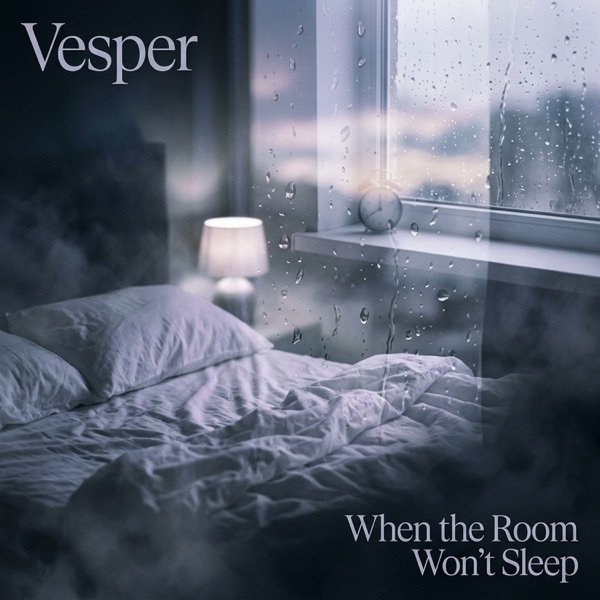
1. THE PROVOCATION
When the Room Won’t Sleep begins with a refusal. Not the refusal of rest, but the refusal to look away from what silence reveals when distraction has burned out. Vesper stages insomnia as a chamber of recognition, where loneliness is no longer a villain to outrun but a mirror with terrible patience. The record understands a modern kind of ache, the kind that lives in lit screens, unfinished messages, and bodies lying inches apart while feeling emotionally unreachable. These songs do not beg for rescue. They ask a harder question: what if the hush you fear is the first place your own voice becomes audible?
2. SYMBOLS & SUBTEXT
The album’s early brilliance lies in how it turns ordinary bedroom details into emotional evidence. On “closed eyes,” the act of keeping her eyes shut is not denial but preservation. “…maybe if I keep them closed, it’ll still feel real” recasts darkness as a last archive of touch. Memory survives only as long as sight does not correct it. Then “cold sheets” delivers one of the record’s sharpest reversals. The emptiness beside her is not literal absence. Someone is there, breathing, turned away. “No crease, no dent, no shadow left behind” becomes a devastating image of intimacy after connection has already died.
Later, “when you’re not here” reveals the album’s moral complexity. Relief enters the room, and with it, guilt. Absence opens space not just around her, but within her. The line “Now it’s open, spilling out my own light” reframes loss as reclamation. By the time “surrender slow” arrives, tears are stripped of romance. They are not for the lover but for the smaller self she became while loving him. Grief turns inward, then cleansing. What breaks is not only attachment, but the habit of shrinking.
3. SONIC ARCHITECTURE
This world is built with restraint so exact it feels physical. Deep 808s sit low in the body, more pulse than impact, while reverb-heavy drums leave large areas of negative space, letting each breath carry dramatic weight. Raindrop textures, muted electric piano, softened guitar figures, and slow pads create the sensation of moisture on every surface. The progression across the album is subtle but decisive: skeletal and dissociated at first, warmer and more melodic as self-recognition sharpens, then gently luminous near dawn.
Vesper’s voice is the true architecture. Close-mic, breath-heavy, often grounded in her lower register, it feels less performed than confessed. Mouth noise, lip parting, trailing phrase endings, these are not imperfections but narrative tools. When melisma appears, it does not decorate. It pleads, reveals, trembles. The production never crowds her. It leaves the room intact.
4. THE PERSPECTIVE SHIFT
What Vesper offers here is not catharsis in the grand sense. It is smaller, stranger, and perhaps more useful. She suggests that solitude can mature from punishment into perception. For listeners who aestheticize sadness at 3 AM, this album interrupts the fantasy just enough to ask what that sadness is protecting. By the closing stretch, survival itself feels newly intimate. You do not leave this record cured. You leave it more able to sit inside your own life without flinching. That is the quiet revelation at the heart of When the Room Won’t Sleep: sometimes the room stays awake so you finally can, too.